posted in
Is AI food logging a good idea??
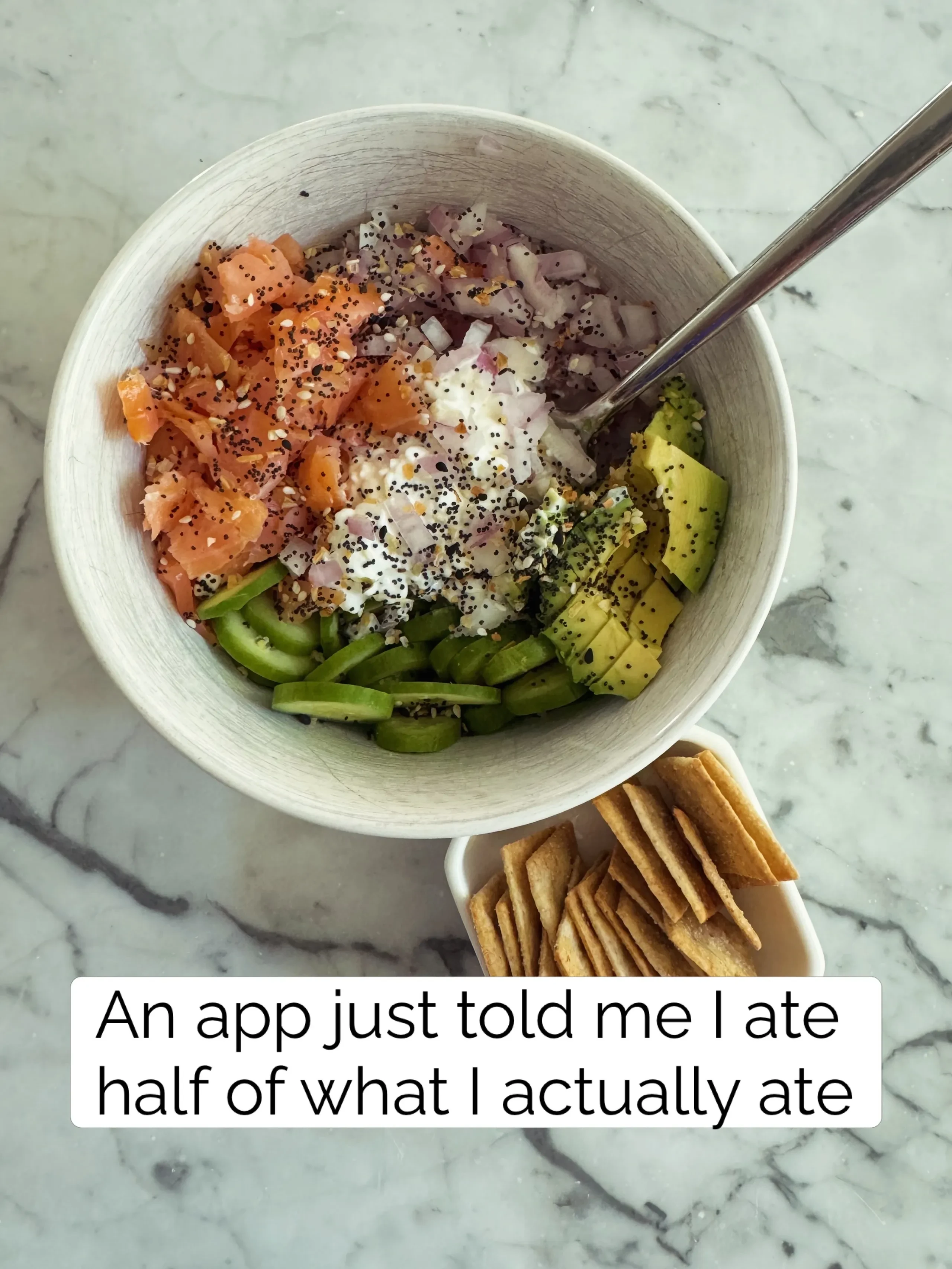
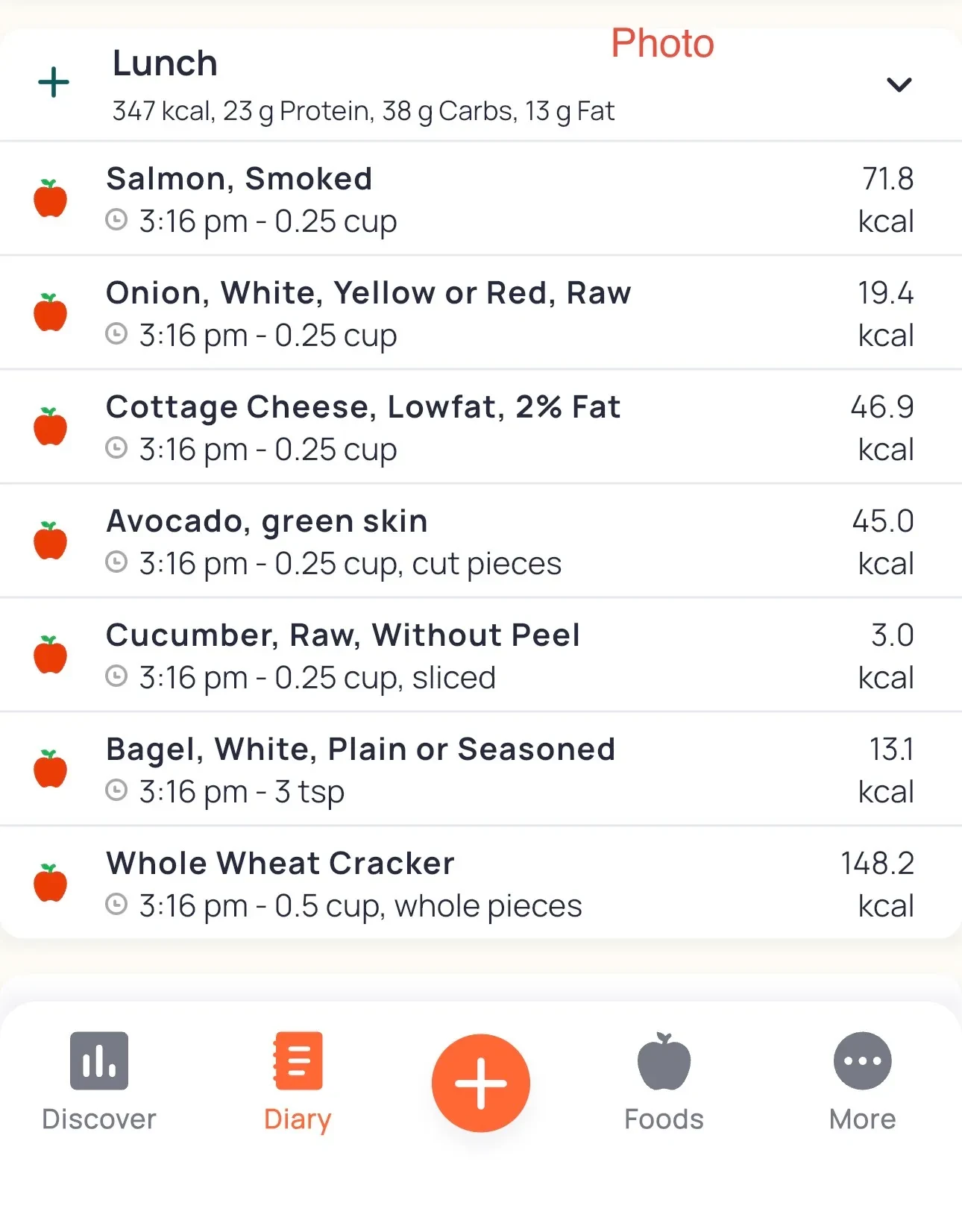
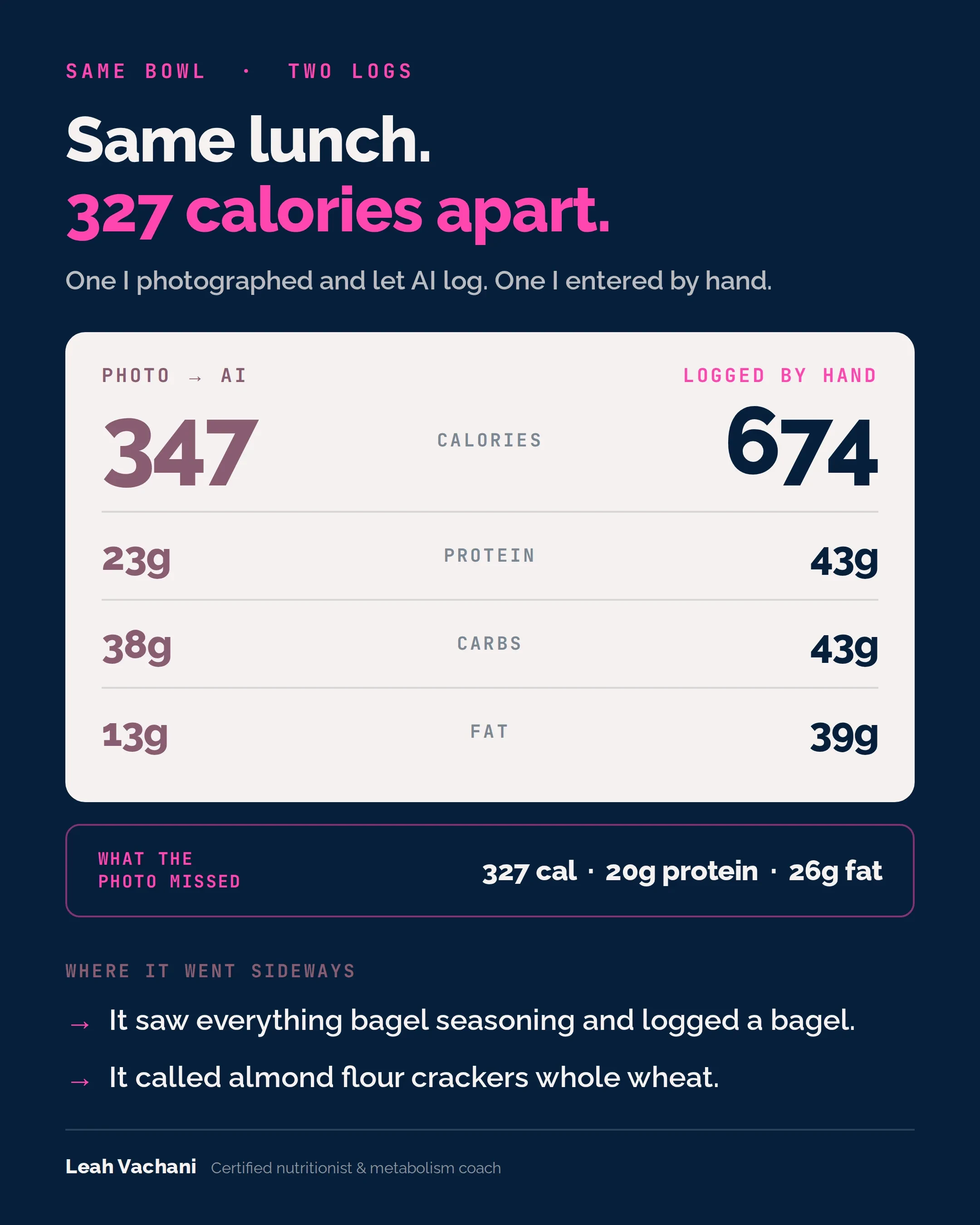
I photographed my lunch, let the app log it from the picture, and it told me I’d eaten 347 calories.
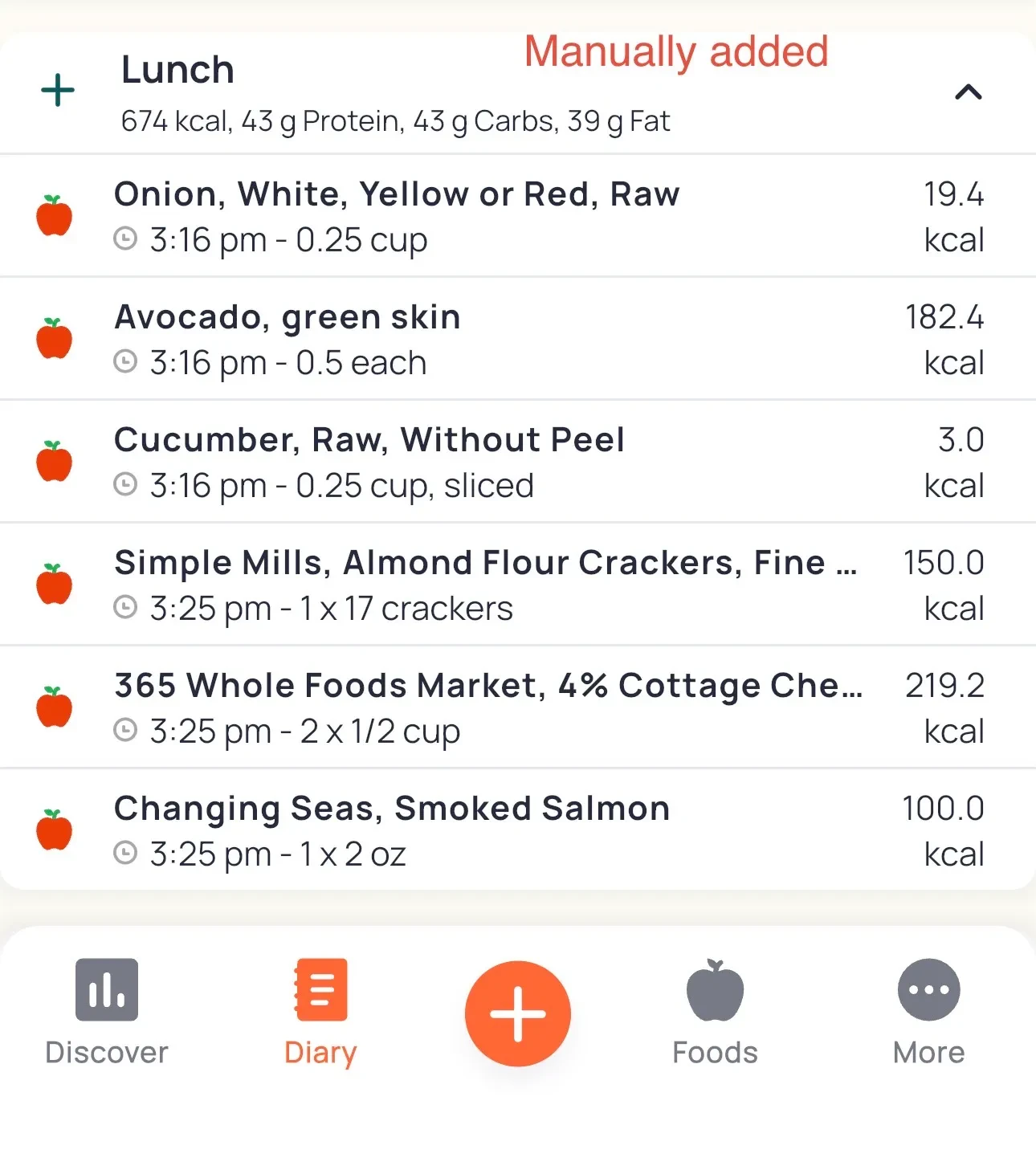
Then I entered the exact same bowl by hand. 674.
If you’ve been tracking and quietly wondering why the numbers never seem to match how you actually feel — this is worth two minutes.
Here’s where it went sideways:
→ It defaulted to 1/4 cup of almost everything. The real bowl had 1/2 an avocado, a full cup of 4% cottage cheese, and 2 oz of smoked salmon.
→ It saw everything bagel seasoning and logged a bagel.
→ It called my almond flour crackers whole wheat.
But the calorie gap isn’t the part I care about most…
Protein came in at 23g instead of 43g. That’s the number a lot of us over 40 are actually working to hit — for staying full, for holding onto muscle, and for a gentler glucose curve after we eat. If I’d trusted that log, I’d have spent the rest of the day chasing protein I’d already eaten.
And look at the carbs: 38 vs 43. Almost identical. Which is exactly why numbers alone can fool us. Whole wheat crackers and almond flour crackers land at a similar carb count on paper, but they don’t tend to behave the same way once they’re in the body.
I’m not anti-AI logging. Speed is the whole reason most of us log at all, and a rough log beats no log. But treat the photo as a first draft, not the answer — correct the portions, swap in what you actually ate, and check the protein and the carb source before you draw any conclusions from it.
Because if we’re using this data to learn what our bodies do with food, the input has to be honest or the feedback is just fiction.
Anyone else tried the photo feature and gotten something wildly off? Tell me what it guessed.
💜 Comment INNER CIRCLE if you want details on the membership — this kind of real-data troubleshooting is exactly what we dig into together twice a month.
#metabolichealthmatters #insulinresistancehelp #bloodsugarbalancing #womensmetabolichealth #midlifemetabolism